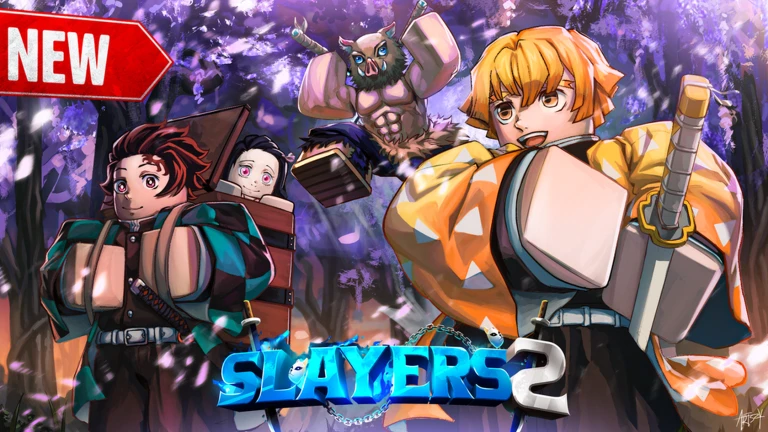
Slayers 2 runs a real fighting-game layer under the anime moves: block points, perfect blocks, hyper armor, strict stuns and guardbreak recovery. The launch balance patch was, in effect, a fighting-game changelog — and reading it teaches you how the game wants you to fight.
The control vocabulary
| Input | Action |
|---|---|
| Q | Dodge with i-frames |
| F | Block / parry |
| M2 | Guard-break attack |
| Z / X / C / V / B | Your kit’s skill slots (tap and hold variants on many) |
| M1 chain | Basic combo string |
Defense: block points and perfect blocks
- Blocking absorbs hits, but only while you have block points. Guard damage eats them — the launch patch tuned guard damage across the whole roster (Obi’s Z, for example, went from roughly 20 block points per cast to about 2).
- Perfect Blocking — timed blocks nullify pressure outright. Some moves are explicitly written as “can now be perfect-blocked” (Thunder’s X post-patch), which tells you the devs balance around it.
- Guardbreak recovery (launch patch): once a guardbreak stun ends, your guard recharges from 25%, and taking another hit cancels the recharge. Getting guardbroken twice in a row is a death sentence — disengage.
Offense: armor, stuns and commitment
The launch patch made one sweeping change you can feel everywhere: i-frames were widely replaced with Hyper Armor. The distinction matters:
- I-frames — you pass through attacks untouched. Old meta.
- Hyper Armor — you still take the damage but cannot be interrupted. New meta: moves commit, and so do you.
Pair that with Strict Stun (the heavy stun that prevents dashing out) and you get the modern combo: land a strict-stun opener, extend with fast moves, finish before your opponent’s guard recharges from 25%.
Fighting styles
Your base kit comes from a fighting style — Soryu, Tai Chi or Reaper — before breathing or demon art skills layer on top:
- Soryu — all moves gained Hyper Armor in the launch patch; the counter window tightened to 2.5s with an 18s cooldown. A commitment style.
- Tai Chi — X gained armor and speed; Z picked up a 0.3s windup. Fast, slippery, punish-light.
- Reaper — X’s windup was extended to 0.67s so the grab barrage can’t come out on reaction speed. Timing-based pressure.
Skill points are finite — the PointsReset code exists for a reason, and it’s worth spending them in one lane rather than scattering.
Reading the launch patch as a combat lesson
Three patterns in the official notes tell you where the game is heading:
- Armor over i-frames — almost every conversion went i-frames → Hyper Armor.
- Guard pressure normalized — outlier guard damage (20 BP casts) was flattened so block points matter longer.
- Combo breakers added — strict stuns on openers, windups on former free follow-ups. Infinite combos are being patched out one by one (Blood Manipulation’s was removed on launch day).
FAQ
What’s the difference between Hyper Armor and i-frames?
I-frames make you untouchable; Hyper Armor keeps you damageable but uninterruptible. The launch patch moved most of the roster to Hyper Armor.
How does guardbreak recovery work now?
After a guardbreak stun ends, your guard recharges starting at 25% — and any hit during the recharge cancels it.
Which fighting style is best?
Soryu for commitment-heavy trades, Tai Chi for slippery movement, Reaper for timing-based grab pressure. It’s a playstyle pick — the launch patch brought all three closer to parity.